
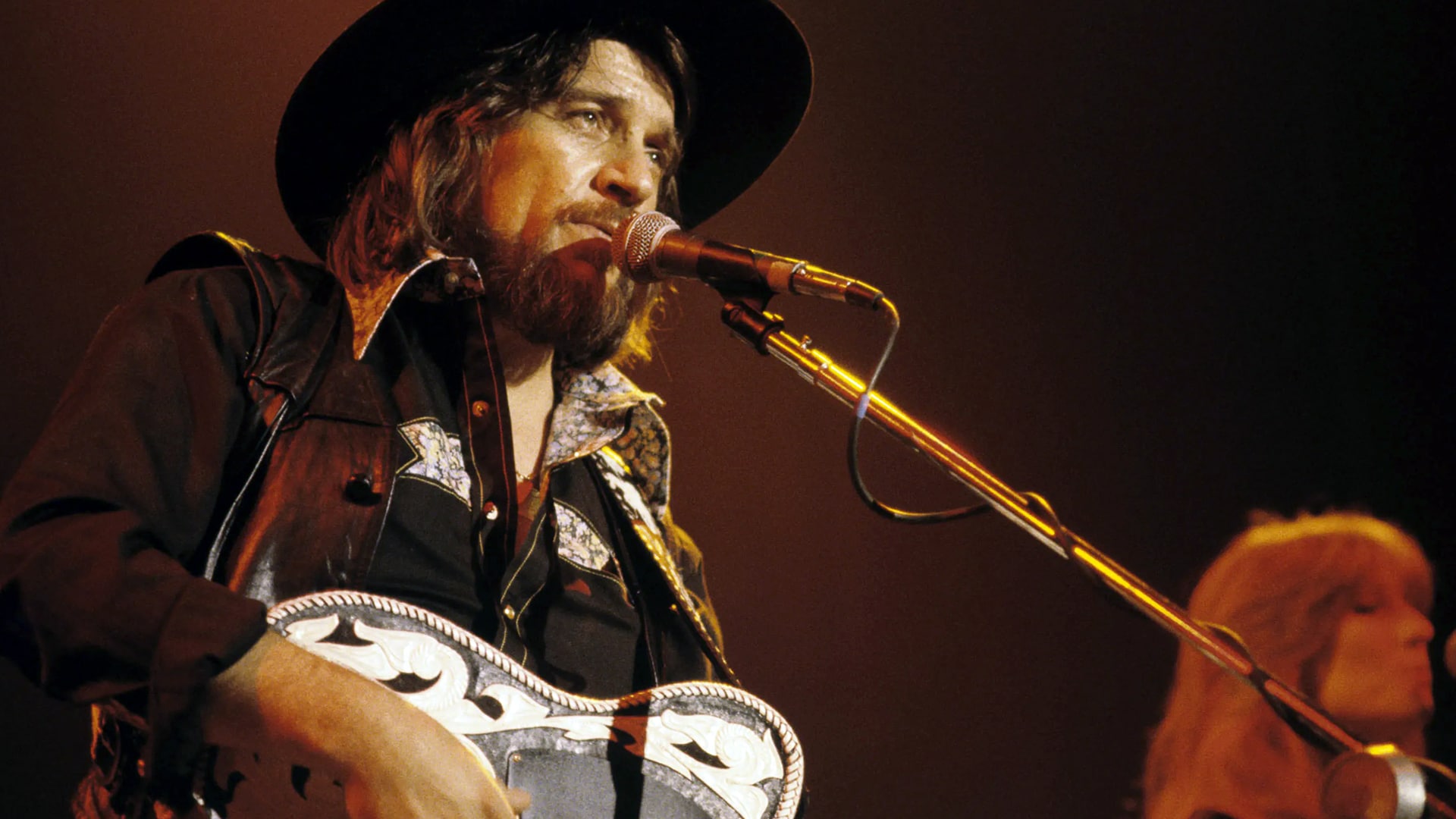
There are moments in country music when the production falls away — no full band, no layered harmonies, no arena lights — and what remains is the songwriter alone with a guitar. That's exactly what makes Waylon Jennings' solo acoustic performance of "Waymore's Blues" on Cowboy Jack Clement's television show so compelling.
Originally released in 1978 on the album I've Always Been Crazy, "Waymore's Blues" was deeply personal. Even the title reflects Waylon's sense of identity — "Waymore" being his full first name, Waymore Jennings. The song is autobiographical, confessional, and unguarded, offering a rare look at the man behind the outlaw image.
"I got my name changed back…"
With that opening line, Waylon sets the tone. The song speaks of hard living, reflection, and reckoning. It isn't flashy. It isn't defiant in the loud, rebellious sense. Instead, it feels like a man looking back at his own story — acknowledging both the scars and the lessons.
On Cowboy Jack Clement's show, stripped down to just his voice and guitar, Waylon delivers the song with remarkable intimacy. His baritone carries a weathered sincerity. There's no studio polish to hide behind. Every phrase lands with weight. Every pause feels intentional.
Clement himself was a legendary figure in country music — a producer and songwriter who valued authenticity above all. That setting suited Waylon perfectly. There's something fitting about an outlaw artist sitting in a relaxed, informal studio environment, simply playing his song as it was written.
Without the driving band arrangement of the original recording, the lyrics take center stage. The performance feels almost like a conversation with the audience — or perhaps with himself. You can hear the reflection in his tone, the lived experience behind each word.
By the time of this appearance, Waylon had already battled personal struggles and public controversies. "Waymore's Blues" acknowledges that journey without self-pity. It's honest, direct, and quietly powerful — much like the man himself.
Watching that solo acoustic rendition today feels like stepping into Waylon's living room. No myth. No mythology. Just a songwriter telling his truth.
And in that simple, stripped-down moment, the outlaw legend feels closer — and more human — than ever.